
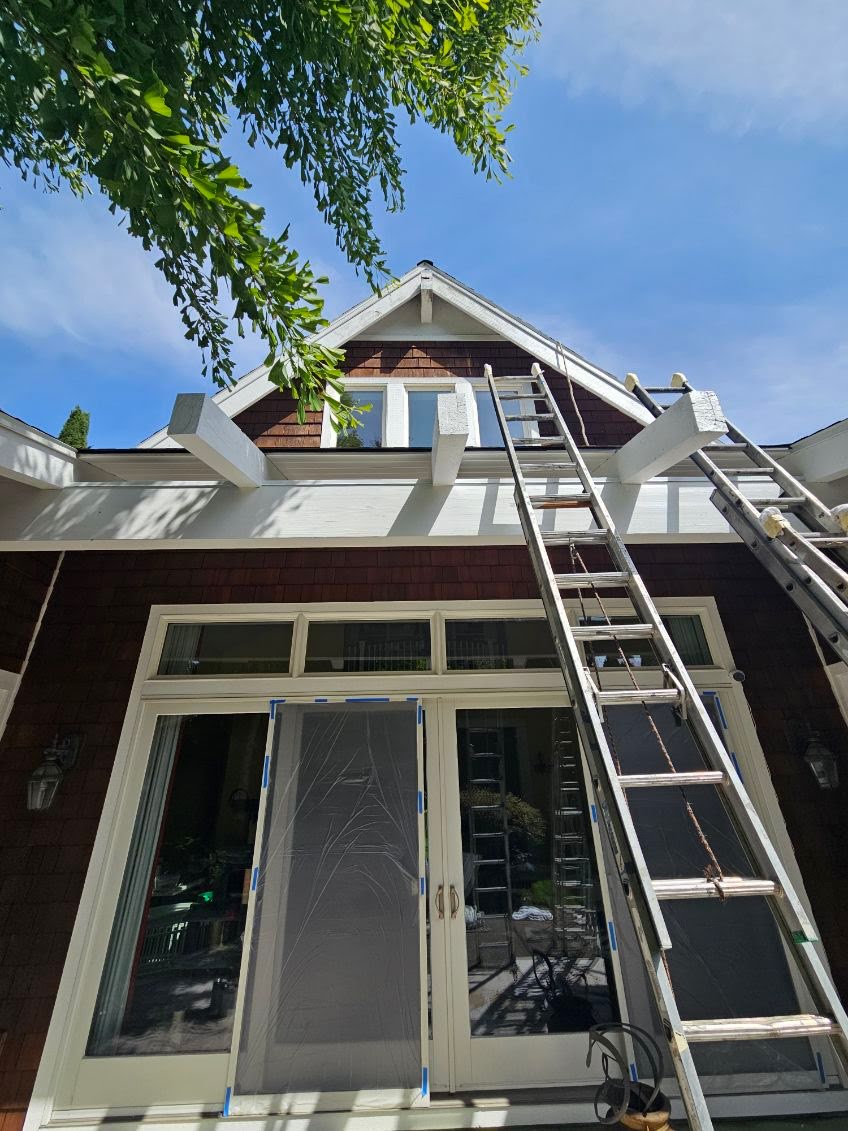
Why Exterior Paint Touch-Ups Are Harder Than You Think
Homeowners often ask:
“Can I just touch up a few spots instead of repainting the whole exterior?”
On paper, touch-ups seem like a simple, cost-effective solution. But in reality, they can make the problem more noticeable. If you live in Portland, Beaverton, or the surrounding areas, this is especially true because our weather and sun exposure affect paint differently across your home.
1. UV Damage Causes Paint to Fade
Sunlight, rain, and temperature changes all gradually break down exterior paint. The UV rays in sunlight are particularly damaging—they fade colors and reduce the vibrancy of your paint over time.
-
Faded paint won’t match new paint perfectly
-
UV exposure varies by wall orientation (south & west sides fade faster)
Even premium exterior paint eventually loses its original color, so a small touch-up often looks noticeably different.
Learn more about exterior paint fading
2. Paint Products Change Over Time
You might assume you can buy the “same color” as your old paint. Unfortunately:
-
Paint formulas and bases change over the years
-
Manufacturers adjust or discontinue colors
-
Batch differences affect the shade
-
Old paint changes texture and sheen over time
Even if you pick the exact brand and color, the new paint may appear different than your existing finish.
See why touch-ups rarely match
3. Sun Exposure Isn’t Consistent
Not every side of your house ages the same way. South and west-facing walls usually fade faster than shaded or protected areas. This uneven fading makes it difficult to blend touch-ups seamlessly.
Trying to repair only one section often highlights differences instead of concealing them.
4. Touch-Ups Often Stand Out
Even when the color seems perfect, touch-ups can leave visible patches or “flashing”. This occurs because:
-
Fresh paint has a different sheen than older paint
-
Weathering changes the texture of the existing paint
-
Application techniques differ from the original job
Instead of hiding the problem, touch-ups may make imperfections more obvious.
Why touch-ups often fail
When Touch-Ups Make Sense
Touch-ups can work in limited cases, such as:
-
Recently painted surfaces (within months)
-
Hidden or less-exposed areas
-
Small repairs before a full repaint
For most older exterior paint, professionals recommend repainting full walls or elevations to achieve consistent color and protection.
The Best Solution: Full Repainting
A full exterior repaint ensures:
-
Uniform color and sheen
-
Proper UV protection
-
Improved curb appeal
-
Long-lasting results
Professional painters in Portland and Beaverton can help you evaluate whether touch-ups or a full repaint is the smarter investment.
Final Thoughts
Exterior paint naturally fades and changes over time. Touch-ups may seem like an easy fix, but UV damage, inconsistent fading, and color matching make them risky. For a flawless look and lasting protection, consider repainting full walls or elevations.
At Sisu Painting, we specialize in exterior painting solutions that maintain beauty and durability for years to come.
No comment